

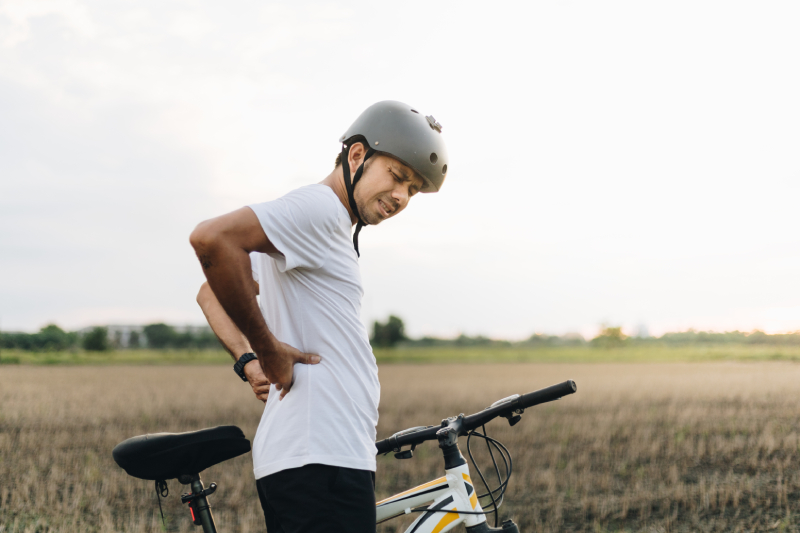
Imagine riding your bike through scenic routes without a nagging ache in your lumbar region. Sounds ideal, doesn’t it? For many cyclists, the joy of riding is often marred by lower back pain, affecting both performance and passion.
Experts highlight a crucial link between cycling posture, bike fit, and core strength. Tackling these critical issues can significantly alleviate problems. This guide delves into preventive measures to keep you pedalling in comfort, drawing on expertise from a leading spine doctor in Bangalore.
Understanding the Causes of Discomfort
Did you know over half of amateur cyclists have felt the sting of lower back discomfort at some point? This widespread issue usually stems from a combination of factors:
- An ill-suited bike fit (frame size or geometry).
- Extended periods in the saddle without movement.
- Strain on muscles due to weak core strength.
- Underlying spinal health concerns.
Grasping these causes is the beginning of a pain-free adventure. A poor riding stance, paired with long hours at a desk job, tends to worsen the situation. Ensuring your bike setup allows for an easy reach to the handlebars and a comfortable bend in your arms can help ease back troubles.
Also Read : Fuel Up: Nutrition Tips for Futsal and Biking Performance
Boosting Comfort: The Role of Bike Fit
The path to a pleasurable ride hinges on the right machine setup. An improperly positioned saddle is often the primary culprit for lower back issues. Essential tips for a better fit include:
- Saddle Height: Set the height to allow a minor knee bend (about 25-30 degrees) at the pedal stroke’s lowest point.
- Saddle Angle: Adjust the saddle to be level to properly support your sitting bones.
- Reach: Arrange handlebar height and reach to prevent over-stretching.
Attending to these aspects helps riders find a more relaxed posture. If you are unsure, professional bike fitting is highly recommended.
Beyond the saddle and bars, don’t neglect your connection to the pedals: Cleat position and “float” are critical differentiators. If your cleats are set too far forward or if you lack appropriate float (the slight rotational freedom in a clipless pedal), your foot might force your knee or hip out of alignment. This subtle rotational restriction travels up the kinetic chain, forcing your pelvis to twist slightly to compensate, leading directly to asymmetric strain on the lumbar spine that simple core work alone cannot fix.
Exercises to Boost Performance and Prevent Pain
The core of the problem often lies within—literally. The strength of your core muscles is the foundation of your riding power. If your core is weak, your lower back has to work overtime to stabilize your pelvis.
Strengthening the midsection with specific core exercises such as planks, deadlifts, and glute bridges can fortify your body. A robust core equips cyclists with improved balance and bike control, leading to more efficient energy transfer from legs to pedals To Read More.
Adjusting Your Cycling Posture
Even with a perfect bike fit, poor habits can cause pain. As top cervical spine surgeons often point out, tension in the neck and upper back can cascade down the spine, altering your posture and stressing the lower back.
Strategies for better posture include:
- Change Positions: Switch between the tops, hoods, and drops of your handlebars. This engages different muscle groups and alters the angle of your back.
- Elbow Check: Ride with a slight bend in your elbows. Locked arms transfer road shock directly to your spine.
- Get Out of the Saddle: Stand up on the pedals occasionally to stretch your legs and relieve pressure on the lumbar discs.
Riding into Comfort
Blending expert insights with actionable steps for optimizing bike fit significantly decreases injury risk. Highlighting the importance of a customized setup and advocating for regular posture changes sheds light on a path to a pain-free biking experience.
Beyond mechanical tweaks, listening to your body is critical. As cyclists aim to balance their passion for biking with overall health, these insights provide a holistic strategy. For a deeper dive into how these practices can revolutionize your biking experience and to rule out serious underlying conditions, reach out to us to discover more.


